

Meet John, a 78-year-old retiree living in Buderim on the Sunshine Coast. John has always been an active soul – enjoying morning walks on Mooloolaba Beach and puttering in his garden. But a few months ago, John’s life took an unexpected turn when he slipped on a wet driveway and fractured his hip. After a successful hip replacement surgery at Sunshine Coast University Hospital, John faced a daunting question: How will I manage the long road of recovery ahead? Driving to a clinic several times a week was out of the question while he was on the mend. That’s when John and his family discovered a solution: mobile physiotherapy services that come right to his home.
The Challenge After Surgery
John’s injury left him using a walker and unable to drive. Even getting in and out of a car or sitting in a waiting room would have been very painful in the early weeks post-surgery. He also felt a bit anxious – worried about losing his independence and not being able to resume his everyday activities. His doctor stressed that physiotherapy was essential to regain strength and mobility, but the thought of traveling to a clinic made John uneasy. “How am I going to do this?” he wondered. John’s daughter, Sarah, lives nearby and helps out, but she works full-time and can’t always take him to appointments easily. They needed a rehab plan that was effective and practical for John’s situation. This is a challenge many Sunshine Coast seniors face: after a hospital stay or surgery, continuing rehab is tough if you’re house-bound or not confident getting out and about. Fortunately, Sarah heard about a local Sunshine Coast mobile physiotherapy service that specializes in at-home visits for seniors. It sounded like the perfect answer.
The Mobile Physio to the Rescue
Within a week of John coming home, a mobile physiotherapist named Emily arrived at his door for the first session. Emily is a warm, friendly professional who’s worked with many older patients. She sat down with John (right at his kitchen table) to discuss his concerns, goals, and to assess his current abilities. John immediately felt at ease – “it was like having a knowledgeable friend visit, who just happens to help you exercise,” he later joked. Emily noted that John’s main goals were to walk without a walker again, manage stairs, and return to gardening. She assured him that with consistent therapy, he could absolutely get there.
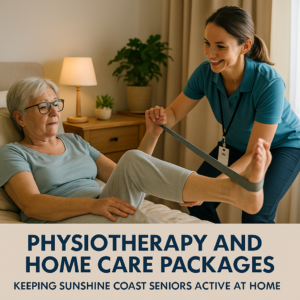
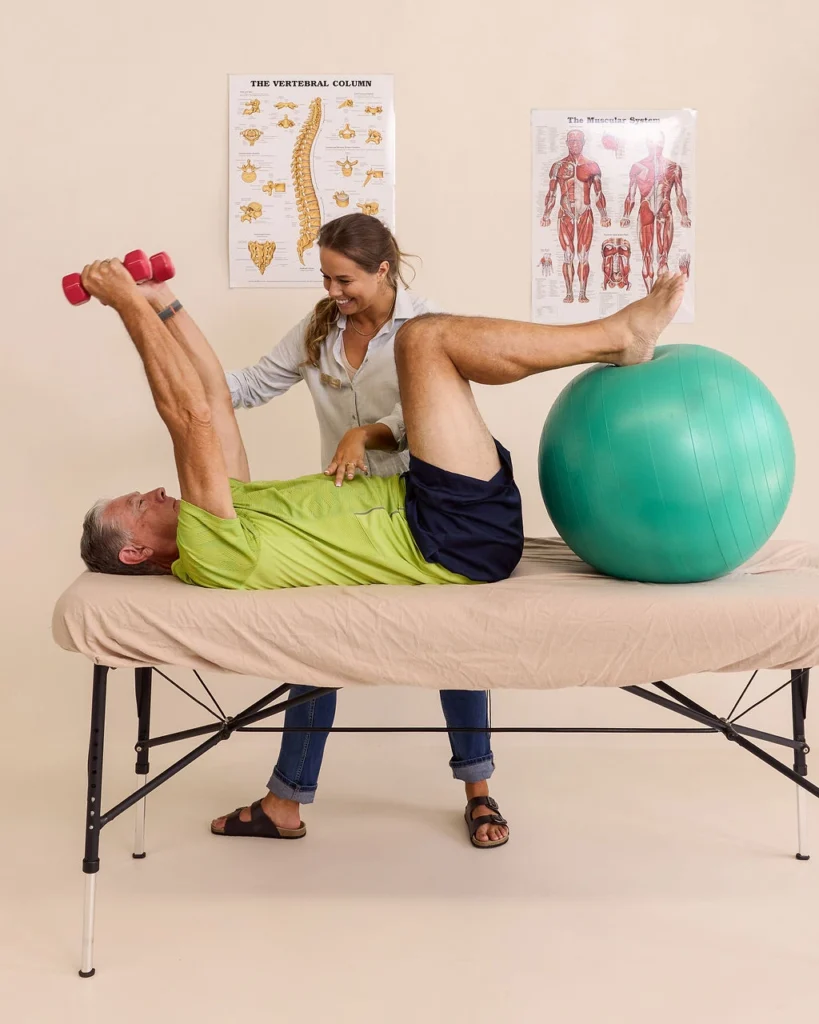
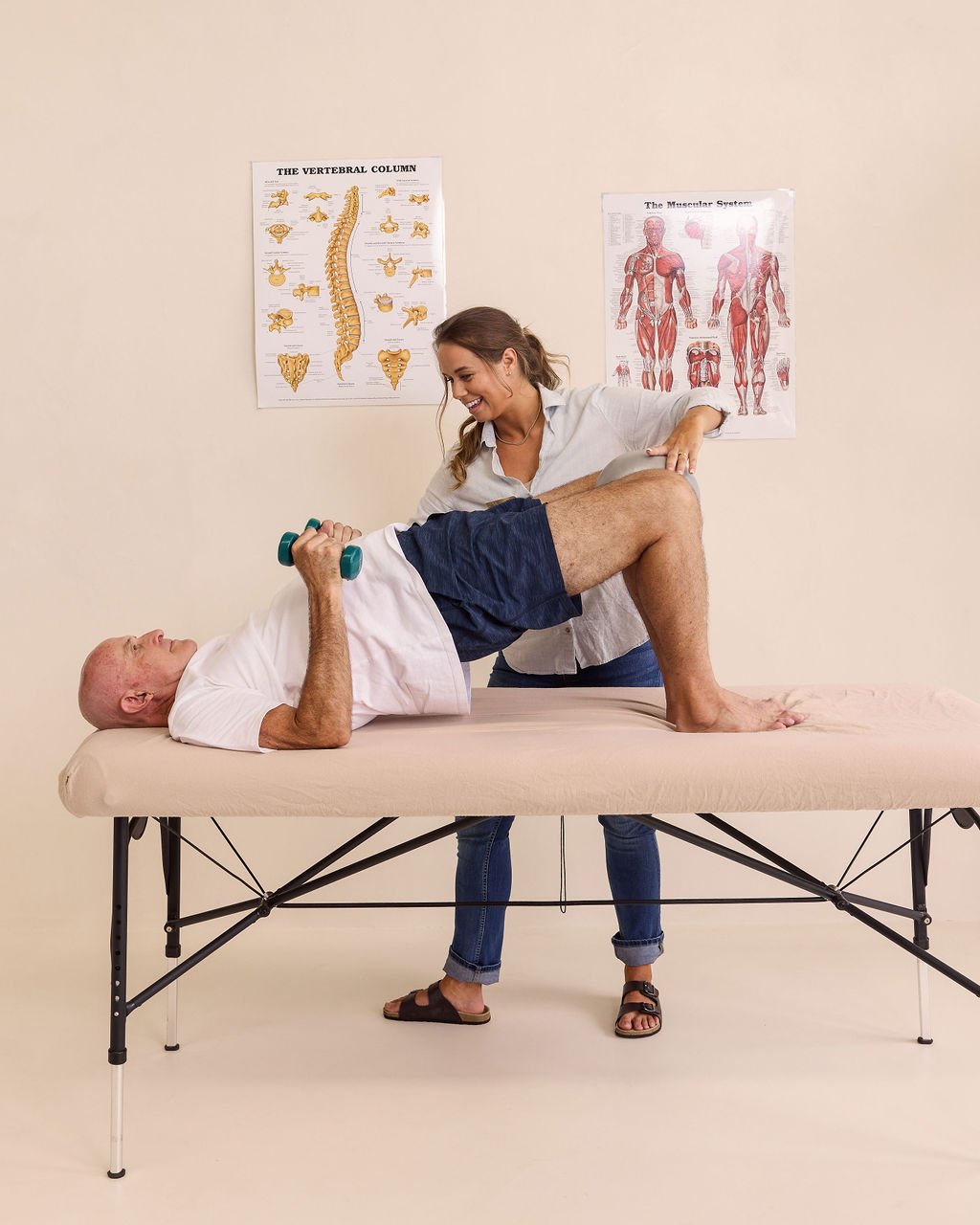
John exercises in bed with his physiotherapist’s assistance. Early in-home therapy focused on gentle movements, pain relief, and building confidence.
In the first few visits, they focused on gentle exercises John could do in bed and sitting, to start rebuilding strength without straining his healing hip. Emily brought a therapy band and taught John some simple leg slides, ankle pumps, and knee bends to keep the blood flowing and muscles activated. Because these exercises were done in John’s own bedroom and living room, he felt comfortable and not rushed. Emily also showed him how to use his walker correctly around the house, and they practiced safer ways of getting up from his couch and bed (using his arms to support, etc.). This one-on-one guidance in real time, in the real environment made a huge difference. John realized some habits he had – like favoring his uninjured leg too much or twisting awkwardly to reach something – could slow down his recovery or even risk another fall. Emily’s eagle eye caught these things and she coached him on better techniques.
After two weeks, John was gaining confidence. Because he didn’t have to worry about transportation, he never missed a session – sticking to the plan consistently helped him progress steadily. Emily gradually introduced new exercises: mini-squats at the kitchen counter for strength, step-ups on his lowest stair to practice climbing, and balance drills standing in the hallway (with her always by his side for safety). She even took John for short walks up and down his driveway to build his endurance in a familiar outdoor setting. Throughout it all, Emily monitored John’s pain and energy levels, adjusting the pace as needed – a flexibility that’s hard to get in a busy clinic visit.
A New Lease on Life
Fast forward eight weeks, and John has made remarkable progress. With Emily’s help, he graduated from the walker to a cane, and eventually was able to take short walks with no assistive device at all around his house and yard. One big milestone was when they practiced walking to his mailbox and back – a small trip, but one that meant the world to John. “I feel like I’ve got my freedom back,” he said, beaming, after accomplishing that feat. Each success, from navigating his porch steps to standing long enough to cook a simple meal, boosted John’s morale. Emily could see his confidence growing with every session. “He became more and more engaged and determined. I was just there to guide him – he did the work,” she noted proudly.
John’s family also noticed the difference. Sarah, who attended a couple of the physio sessions, learned how to assist her dad with certain stretches and was amazed to see his improvements first-hand. “Dad’s posture and balance are so much better now. And emotionally, he’s much more upbeat,” she shared. It helped her peace of mind, too, knowing a professional was keeping an eye on her father’s recovery environment and safety at home. Emily had even suggested a few simple home modifications, like adding a second handrail on the stairs and removing a loose rug in the hallway, to prevent future falls – advice that could prove life-saving.
Perhaps the best part: John is back to enjoying his life. On a sunny Saturday morning, about three months after his surgery, John walked (with a cane for security) alongside Sarah at the local farmers’ market – an outing he wouldn’t have imagined doing so soon after his injury. “I couldn’t have done this without the help that came to me,” John said, referring to the mobile physio service. “It’s like they brought the clinic to my home, and it kept me moving forward.”
John’s story is just one example of how mobile physiotherapy can turn a daunting recovery into a manageable, even empowering journey. By receiving therapy at home, he was able to start rehab early, stay consistent, and practice skills in the exact context of his daily life – all factors that research shows can improve outcomes. For many seniors on the Sunshine Coast, healing at home isn’t only more comfortable, it can also be more effective. John often tells his friends at the bowling club (where he’s gradually returning) about his experience. Some were struggling with their own mobility issues, and after hearing John, they’re now considering home physio too.
In the end, what seemed like a setback became a success story of regained independence. With the support of a skilled physiotherapist and the convenience of home visits, John has returned to the activities he loves – tending his garden, strolling by the beach, and living life on his terms. His journey illustrates a hopeful message for other older adults: with the right help, you can recover and thrive in the place you feel most comfortable – home.